















When reviewing the specifications of a mini crawler excavator, engine power and bucket capacity are often treated as two independent selling points. In fact, these two items, together with the overall operating weight, jointly determine what tonnage class the machine is designed for and what kind of work it is suited to. This article uses the verified parameters of the SH15P as a reference to explain the order in which this set of data should be read, which values corroborate each other, and which conclusions cannot be drawn from numbers alone.
First look at operating weight—it determines the machine's operating boundaries
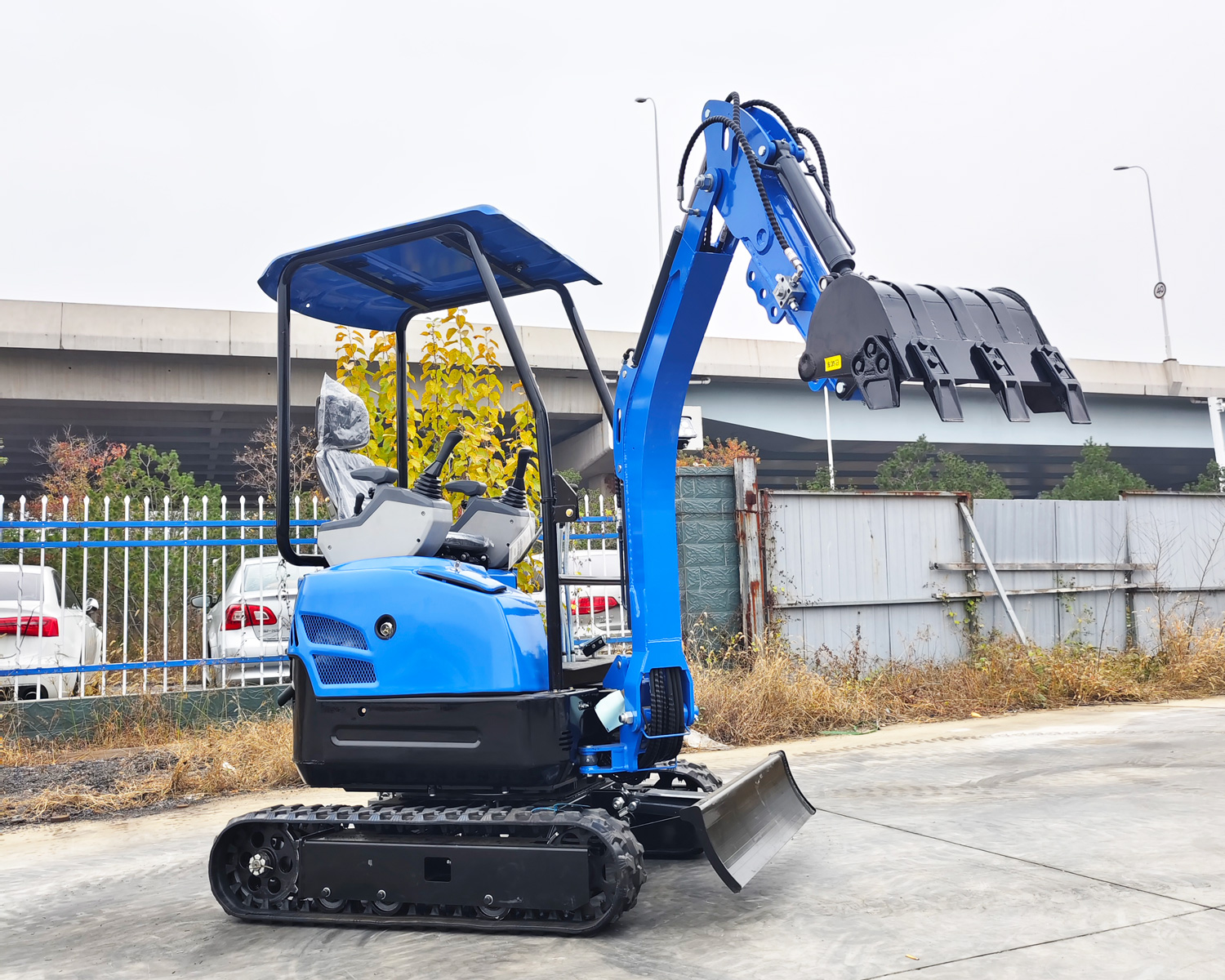
The SH15P's overall operating weight is 1200 kg, i.e., the 1.2-ton class. Tonnage first constrains not the digging capability, but what sites the equipment can enter and how it can be relocated. The 1.2-ton class means a compact body, but whether it can pass through a specific passage, floor slab, or courtyard gate still needs to be judged against actual dimensions and on-site clearance—not tonnage alone.
Complementing the weight is a track ground contact length of 1370 mm. This value relates to ground contact area and travel stability and has some reference value on uneven ground such as mud or gravel, but it is not a conclusion about passability—slope, soil moisture content, and turning radius still need on-site confirmation.

Next look at the engine: two power options correspond to different market requirements
Specifications show the SH15P can be equipped with either a Laidong 385 or a Yanmar 3TNV74F engine, both meeting EURO 5 and EPA 4 emission standards. Their power outputs differ:
| Engine | Power/Speed |
|---|---|
| Laidong 385 | 18.8kW / 2400rpm |
| Yanmar 3TNV74F | 11.2kW / 2400rpm |
Two power levels in the same tonnage class are usually related to the target market's emission regulations, power preferences, and matching costs. When choosing, first clarify which emission requirements apply to the region where the equipment will be sold or used, then confirm the power configuration available in that region. Power differences affect the available input to the hydraulic system, but the specifications here do not provide hydraulic flow, pressure, or other parameters, so no specific difference in digging force or working speed between the two models can be inferred.
Bucket capacity is a result of tonnage class, not an independent indicator
The SH15P's standard bucket capacity is 0.025m³. Viewed together with the 1.2-ton operating weight and 11.2–18.8kW power, this indicates a compact machine intended mainly for shallow excavation, earthmoving, and material handling, rather than a model pursuing single-bucket output. The matching relationship among bucket capacity, power, and weight is a clue for judging whether the tonnage class is reasonable: too large a bucket with insufficient power makes cycle work laborious; too small a bucket with excessive weight limits output per unit time.

Note that 0.025m³ is the standard configuration value. Whether other bucket types are used in actual work and how soil type affects the fill factor are not covered by the data and should be confirmed when requesting a quote.
Working range data answers “can it dig there?”
Tonnage class must also be tied to specific working dimensions. The SH15P's maximum digging height is 2650 mm, maximum dumping height 1800 mm, and maximum digging depth 1800 mm. These three determine whether it can complete a given excavation depth and whether it can dump material into a transport vehicle at a specified height. If the project requires trench depth or dumping height beyond these values, it is not a configuration issue but a mismatch in tonnage class.
Which conditions need to be verified before requesting a quote
- Access conditions: entrance width to the work area, clear height, and ground bearing capacity, judged against overall dimensions to determine whether the machine can enter.
- Excavation requirements: whether the maximum digging depth of 1800 mm covers the design depth and leaves allowance for over-excavation and bedding.
- Emissions and power: the emission standard applicable in the region of use and the availability of the Laidong or Yanmar version in that region.
- Transport method: standard wooden crate 3150×1170×1700 mm, cabin version 2600×1170×2400 mm; use these to check container or flatbed loading plans.
- Attachment compatibility: if work such as breaking is involved, the host machine's hydraulic parameters and attachment matching conditions must be checked separately; the available specifications do not provide the SH15P's hydraulic flow and pressure.
What the data can and cannot show
The engine model and power, operating weight, bucket capacity, and three working range dimensions together outline the SH15P's tonnage class: 1.2-ton class, compact body, mainly for shallow excavation and material handling. However, these parameters cannot prove its actual output, fuel consumption, or reliability on a specific site, and the specifications here contain no customer usage records for citation. To judge suitability, compare the above conditions to be verified item by item with the site conditions before deciding.
When requesting a quote, it is recommended to provide: material type and volume, excavation depth and dumping height requirements, site access dimensions, daily shift arrangements, emission requirements for the region of use, and whether matching attachments are needed. Only with complete information can the supplier give verifiable configuration recommendations rather than just quoting a model.